
> "For your Haval H6 in Pakistan, always insist on genuine Thermoplastic Polyurethane (TPU) Paint Protection Film. Avoid cheaper, inferior Thermoplastic Polyhybrid (TPH) or Polyvinyl Chloride (PVC)/Polyurethane Composite (PCU) films. These 'scam' materials rapidly yellow, crack, delaminate, and aggressively bond, causing irreparable damage to your Haval's delicate clear coat upon removal, especially under Multan's intense UV and heat."
Exposed: TPU vs TPH vs PVC/PCU PPF Scams in Pakistan – Don't Ruin Your Haval H6's Paint!
Your gleaming new Haval H6, especially in its sophisticated Titanium Grey, represents a significant investment and a statement of style. In the challenging environmental conditions of Multan, Pakistan – from scorching 48°C summers and relentless UV radiation to ubiquitous dust, abrasive grit, and corrosive alkaline bore-water – protecting its factory finish isn't just a luxury; it's a necessity. Paint Protection Film (PPF) is the ultimate guardian, but a burgeoning market of deceptive, low-quality films threatens to turn your paint protection dream into a paint damage nightmare.
At The Detail Ace, The Detail Ace Studio Multan, we confront these "PPF scams" daily. This definitive guide exposes the critical differences between genuine TPU PPF and its dangerous imitations: TPH, PVC, and PCU. We'll equip you with the knowledge to safeguard your Haval H6 1.5T / HEV, ensuring its Titanium Grey finish remains pristine for years to come.
The Unseen Enemy: Understanding Your Haval H6's Paint & Pakistan's Environment
To truly appreciate the value of quality PPF, you must first understand what it's protecting and the unique threats it faces.
Haval H6 Paint Science: Micron Thickness & Mohs Hardness
Modern automotive paint systems, including those on your Haval H6, are complex multi-layer structures. The outermost layer, the clear coat, is your primary defense against environmental damage and the source of your car's brilliant gloss.
- Clear Coat Micron Thickness: On a typical Haval H6, the total paint thickness (primer, base coat, clear coat) usually ranges from 100 to 140 microns (µm). Crucially, the clear coat itself is often a mere 30-50 microns thick. For context, a human hair is roughly 70 microns thick. This microscopic layer is surprisingly robust but incredibly susceptible to permanent damage from deep scratches, stone chips, chemical etching, and improper detailing. Inferior PPF, particularly its aggressive adhesive, can literally strip this precious clear coat upon removal, leaving irreversible damage.
- Mohs Hardness Scale: This scale measures a material's resistance to scratching, from 1 (talc) to 10 (diamond). Automotive clear coats typically register between 2H to 4H on the Mohs scale. While some modern ceramic-infused clear coats are harder, they are still relatively soft compared to everyday abrasives like sand (6-7 Mohs) or a sharp key (5-6 Mohs). A high-quality PPF provides a sacrificial, self-healing layer that is significantly harder than your clear coat, absorbing impacts and resisting scratches that would otherwise mar your paint.
Multan's Environmental Gauntlet: UV Degradation & Bore-Water Calcium Stains
Multan presents a particularly harsh environment for automotive paint and, by extension, any protective film.
- Extreme UV Degradation (48°C Summers): Our summers frequently exceed 48°C, accompanied by intense, unfiltered UV radiation. This relentless exposure is the primary culprit behind paint fading, oxidation, and the accelerated degradation of inferior PPF.
- PVC/PCU: These films, being essentially plastics, rapidly yellow, become brittle, crack, and lose clarity under UV exposure. Their adhesives break down, leading to bubbling and peeling.
- TPH: While marketed as "hybrid," TPH often contains a high percentage of PVC. It yellows faster than genuine TPU and can harden, making removal a destructive process.
- TPU: High-grade TPU films are engineered with UV inhibitors that significantly slow down the yellowing process and maintain flexibility, ensuring long-term clarity and protection.
- Alkaline Bore-Water Calcium Stains: Hard water, prevalent in many parts of Pakistan due to bore-water usage, contains high levels of dissolved minerals, especially calcium and magnesium. When this water dries on your vehicle, these minerals are left behind as visible "water spots" or "calcium stains."
- Etching Risk: On bare paint or poor-quality PPF, these mineral deposits can etch into the surface, leaving permanent marks, especially when exposed to heat.
- PPF Resistance: Genuine TPU PPF offers a smoother, less porous surface that is more resistant to mineral adhesion and etching. While not immune, it's significantly easier to clean and less prone to permanent damage from water spots compared to direct paint exposure or rougher, degraded TPH/PVC films. However, prompt washing is always recommended.
The PPF Arena: TPU vs TPH vs PVC/PCU – A Technical Showdown
The market is flooded with acronyms, making it challenging to differentiate genuine protection from costly deception. Here's the definitive breakdown:
Understanding the Materials
- 1TPU (Thermoplastic Polyurethane):
- The Gold Standard. A premium, highly flexible, elastic, and durable polymer.
- Key Characteristics: Excellent impact absorption, self-healing properties (minor scratches disappear with heat), superior optical clarity, UV resistance, stain resistance, and a non-aggressive, paint-safe adhesive.
- Application: Preferred for high-end paint protection, ensuring paint safety during removal.
- 2TPH (Thermoplastic Polyhybrid/Polyolefin Hybrid):
- The Misleading Hybrid. Often marketed as a "cost-effective alternative" to TPU.
- Key Characteristics: A blend, typically with a high percentage of PVC or similar plastics, coated with a TPU-like top layer. It lacks the true elasticity, self-healing, and long-term durability of pure TPU. It's stiffer, yellows faster, and becomes brittle over time.
- Application: The most common "scam" PPF in Pakistan, often sold at TPU prices. While initially appearing clear, its degradation accelerates significantly under our climate. Its adhesive can become extremely aggressive, risking paint damage upon removal.
- 3PVC (Polyvinyl Chloride) / PCU (Polyurethane Composite):
- The Obsolete Danger. These are essentially vinyl films, not true PPF. PCU might imply a blend, but it largely shares PVC's characteristics.
- Key Characteristics: Rigid, very prone to yellowing, cracking, and hardening. No self-healing properties. The adhesive is often extremely aggressive and cures permanently to the paint, guaranteeing paint damage (clear coat lift, adhesive residue) upon removal.
- Application: Cheap, short-term wraps or architectural films, NEVER suitable for long-term automotive paint protection. Unfortunately, still peddled by unscrupulous installers as "PPF."
Comparative Metrics & Technical Specifications
| Feature | Genuine TPU PPF | TPH PPF (Scam) | PVC/PCU PPF (Dangerous Scam) |
|---|---|---|---|
| Material | Thermoplastic Polyurethane | Thermoplastic Polyhybrid (often PVC-heavy) | Polyvinyl Chloride / Polyurethane Composite (Vinyl) |
| Thickness (Mils/µm) | 8-10 Mils (200-250µm) | 6-8 Mils (150-200µm) | 4-6 Mils (100-150µm) |
| Elasticity/Flexibility | Excellent; conforms well to curves | Moderate; less conformable, stiffer | Poor; stiff, prone to lifting on curves |
| Self-Healing | YES (minor scratches disappear with heat) | Limited/None | NO |
| Clarity/Yellowing Resistance | Excellent; UV inhibitors, virtually no yellowing for years | Poor-Moderate; yellows noticeably within 6-18 months | Very Poor; yellows rapidly (3-6 months), becomes opaque |
| Impact/Chip Protection | Excellent; absorbs and dissipates impact energy | Moderate; less effective due to stiffness | Poor; cracks on impact, offers minimal protection |
| Chemical Resistance (pH) | pH 3-11 (Resistant to mild acids/alkalis) | pH 4-10 (Degrades faster with exposure) | pH 5-9 (Very sensitive, degrades rapidly) |
| Heat Tolerance (°C) | -40°C to +120°C (Stable in Multan heat) | -20°C to +80°C (Degrades significantly >60°C) | -10°C to +60°C (Becomes brittle, cracks >50°C) |
| Adhesive Type | Non-aggressive, pressure-sensitive acrylic | Aggressive, often rubber-based or low-quality acrylic | Extremely aggressive, permanent bond, often solvent-based |
| Paint Safety (Removal) | SAFE (removes cleanly, no clear coat damage) | HIGH RISK (can lift clear coat, leave residue) | EXTREME RISK (almost guaranteed clear coat removal) |
| Warranty (Typical) | 5-10 Years (Non-yellowing, delamination) | 1-3 Years (often voided by yellowing) | No official warranty for automotive use |
| Cost (Relative) | High | Medium (often priced near TPU) | Low (but high hidden cost in paint damage) |
| Pros | Ultimate protection, maintains resale, invisible | Cheaper than TPU (initially) | Very cheap (initial cost) |
| Cons | Higher initial cost | Yellows, hardens, paint damage on removal | Rapid yellowing, cracking, guaranteed paint damage |
The Detail Ace: The Detail Ace Studio Multan's 5-Stage Studio Protocol for Your Haval H6
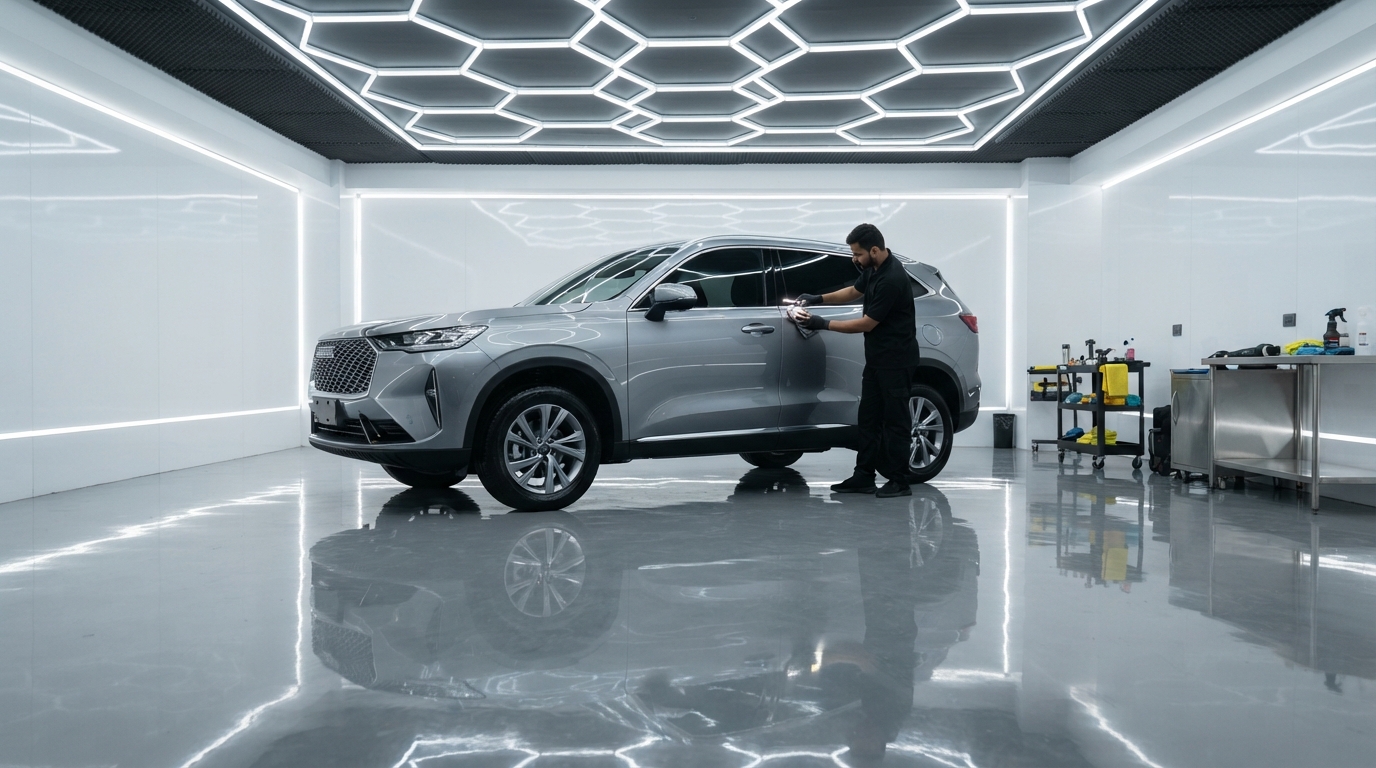
At The Detail Ace Studio Multan, applying PPF to your Haval H6 is not merely an installation; it's a precision operation conducted in a controlled cleanroom environment by certified technicians. Our disciplined 5-stage protocol ensures flawless application and maximizes the longevity and performance of your genuine TPU PPF.
Cleanroom Environment: The Foundation of Flawless PPF
Our dedicated PPF studio maintains:
- Controlled Lighting: Ensuring every paint defect and film edge is visible.
- Dust Filtration Systems: Minimizing airborne contaminants that cause imperfections under the film.
- Temperature & Humidity Control: Optimal conditions for film adhesion and maneuverability.
- Skilled Technicians: Regularly trained and certified in the latest PPF application techniques.
5-Stage Studio Protocol
- 1Stage 1: Pre-Inspection & Decontamination (Approx. 4-6 Hours)
- Purpose: To meticulously clean the vehicle and identify all existing paint imperfections.
- Process:
- Initial Wash: pH-neutral shampoo, two-bucket method, thorough rinse.
- Chemical Decontamination: Iron fallout remover, tar/bug remover to dissolve bonded contaminants.
- Mechanical Decontamination: Gentle clay bar treatment to lift embedded grit, industrial fallout, and overspray, leaving a perfectly smooth surface.
- Detailed Inspection: Under specialized LED lighting, every panel of your Haval H6 is inspected for scratches, swirls, chips, or factory defects.
- Turnaround: Vehicle prepared for paint correction.
- 2Stage 2: Paint Correction (Approx. 8-16 Hours, depending on condition)
- Purpose: To restore the paint to its absolute best condition, removing all correctable defects before PPF application. PPF will lock in any existing flaws.
- Process:
- Multi-Stage Polishing: Using orbital polishers, varying pads, and diminishing abrasive compounds, we meticulously remove swirl marks, light scratches, oxidation, and haze.
- Refinement: A final polishing step enhances gloss and clarity, preparing the surface for bonding.
- Panel Wiping: Each panel is re-wiped with IPA (Isopropyl Alcohol) to remove any polishing oils or residues, ensuring a bare, clean surface.
- Turnaround: Paint restored to near-perfection.
- 3Stage 3: Panel Preparation & Template Cutting (Approx. 2-4 Hours)
- Purpose: To ensure the PPF adheres perfectly and is cut with precision.
- Process:
- Final Panel Wipe: A final, comprehensive wipe-down of all target panels with a specific surface preparation solution to ensure no dust or oils remain.
- Digital Pattern Selection: Utilizing a state-of-the-art plotter, vehicle-specific patterns for your Haval H6 are digitally cut from the selected premium TPU film. This minimizes hand-cutting on the vehicle's paint, reducing risk.
- Film Alignment & Pre-Stretching (if necessary): Film pieces are carefully laid out and prepped for application.
- Turnaround: Panels ready for film application.
- 4Stage 4: PPF Application (Approx. 12-24 Hours, depending on coverage)
- Purpose: The precise installation of the TPU film onto the vehicle's surfaces.
- Process:
- Wet Application: Using a slip solution (deionized water + specific PPF application gel), the film is floated onto the panel.
- Precision Positioning: Expert technicians meticulously position the film, ensuring perfect alignment with panel edges and contours, often wrapping edges for seamless integration.
- Squeegeeing: The slip solution is carefully squeegeed out from under the film, creating a strong, bubble-free bond. This requires extreme patience and precision to prevent trapped air or liquid.
- Edge Sealing: Edges are meticulously sealed, sometimes using heat guns at precise temperatures, to ensure maximum adhesion and prevent lifting.
- Turnaround: Film applied, initial cure begins.
- 5Stage 5: Post-Application Curing & Final Inspection (Approx. 2-4 Hours + 24-48 Hour Cure Time)
- Purpose: To ensure the film fully bonds and presents a flawless finish.
- Process:
- Initial Cure: The vehicle remains in the controlled environment, allowing the adhesive to bond effectively. Minor water bubbles, known as "hazing," are a normal part of this process and will evaporate within days to weeks.
- Detailed Post-Application Inspection: A final, rigorous inspection under various lighting conditions to identify and address any minuscule imperfections, lift points, or debris.
- Client Handover & Care Instructions: A comprehensive walkthrough with the Haval H6 owner, detailing proper PPF maintenance and the initial cure period expectations.
- Turnaround: Vehicle ready for handover after the initial cure, with full bonding occurring over 2-4 weeks.
Concrete Actions & Warnings: Protecting Your Investment
You've chosen the best PPF for your Haval H6. Now, extend its life and performance with proper care.
Washing & Maintenance Protocols
- 1Embrace the Two-Bucket Method: Always use two buckets – one with pH-neutral car wash soap and water, the other with clean rinse water. Use grit guards in both buckets to trap abrasive particles. This prevents swirling dirt back onto your Haval H6's PPF and paint.
- 2Use pH-Neutral Car Wash Soap: Harsh, alkaline, or acidic soaps can degrade the PPF's top coat and accelerate wear. Stick to reputable, pH-neutral car shampoos designed for coated vehicles.
- 3Soft Microfiber Mitts & Towels: Wash your Haval H6 with high-quality, plush microfiber wash mitts. Dry with soft, dedicated microfiber drying towels, blotting rather than dragging to prevent scratches.
- 4Avoid High-Pressure Washing Too Close: While PPF is durable, excessively powerful or close-range pressure washing can lift edges, especially if improperly applied. Maintain a safe distance (at least 1 foot) and avoid directing spray directly at film edges.
- 5Remove Contaminants Promptly: Bird droppings, insect splatter, tree sap, and hard water spots should be cleaned off as soon as possible. Their acidic/alkaline nature can etch through PPF and paint if left to cure under the Multan sun. Use a quick detailer or dedicated bug/tar remover carefully.
- 6PPF-Specific Sealants/Detailers: Enhance your PPF's gloss and hydrophobic properties with a dedicated PPF-safe spray sealant or detailer every few washes. These products often contain ceramic polymers that add an extra layer of protection and make cleaning easier.
- 7Annual Professional Inspection: Bring your Haval H6 back to The Detail Ace at The Detail Ace Cleanroom Studio Multult an annually for a professional PPF inspection. We can identify and address minor issues before they escalate, ensuring your warranty remains valid.
Critical Warnings & What to Avoid
- NEVER Use Greasy Silicone Dressings on PPF: Silicone-based products, tire dressings, or interior protectants can leave a greasy, oily residue that attracts dust, stains the PPF, and is extremely difficult to remove. These can also degrade the film over time. Opt for water-based, non-greasy protectants if necessary.
- AVOID Abrasive Polishes, Waxes, or Compounds: Unless specifically designed for PPF (which are rare), standard automotive polishes, waxes containing harsh cleaners, or cutting compounds will damage the PPF's self-healing layer and reduce its clarity.
- Do NOT Use Scrub Brushes, Rough Sponges, or Dirty Rags: These will scratch and abrade the PPF, negating its protective benefits.
- Beware of "Too Good To Be True" Prices: If a full-car PPF installation for your Haval H6 is offered at an unbelievably low price, it's almost certainly TPH, PVC, or PCU. The initial savings will be dwarfed by the eventual cost of paint correction and re-application, or worse, full paint repair.
- Always Ask for Brand Certification & Warranty: Legitimate TPU PPF brands come with multi-year warranties (typically 5-10 years) against yellowing, cracking, staining, and delamination. Insist on seeing the physical warranty card and verifying the installer's certification from the film manufacturer.
- Inspect the Installation Facility: A professional PPF installation requires a clean, well-lit, dust-free environment. If the "studio" looks like a dusty garage, walk away.
- The Ultimate Warning: The DANGER of Removing Inferior PPF: This is perhaps the most critical warning. When TPH or, especially, PVC/PCU films degrade, their aggressive, cheap adhesives bond almost permanently to your Haval H6's clear coat. Attempting to remove these films will inevitably lead to:
- Clear Coat Delamination: The adhesive strips off the clear coat, leaving dull, unprotected paint.
- Severe Adhesive Residue: Stubborn, impossible-to-remove glue that permanently tarnishes the paint.
- Paint Scratches & Gouges: During the struggle to remove the brittle, flaking film.
- The only "solution" is often a costly respray of the affected panels, costing many times more than the initial "cheap" PPF.
Frequently Asked Questions (FAQ)
1. How can I verify if a PPF installer in Pakistan is legitimate and uses genuine TPU for my Haval H6?
A legitimate installer will offer clear evidence: 1) Brand Certifications: They should proudly display certificates from reputable global TPU PPF manufacturers (e.g., XPEL, SunTek, Llumar). 2) Transparent Facility: A dedicated, clean, climate-controlled installation bay is non-negotiable. 3) Warranty: Insist on a written manufacturer-backed warranty for 5-10 years, not just a verbal promise. 4) Samples: Ask for a sample of the film; genuine TPU is soft, stretchy, and can self-heal with heat (e.g., a hairdryer). 5) Online Reviews & Reputation: Check their social media, Google reviews, and ask for testimonials.
2. Will PPF affect my Haval H6's Titanium Grey paint finish or alter its appearance?
High-quality, genuine TPU PPF, when professionally installed, is virtually invisible. It will not alter the Titanium Grey color or its metallic flake. In fact, it often enhances the gloss and depth of the paint, giving it a richer, "wetter" look. The film is optically clear and designed to maintain the factory finish without yellowing or hazing. Inferior TPH or PVC films, however, will quickly yellow, dull the finish, and obscure the true color.
3. What's the real cost difference between TPU and TPH, and is investing in TPU truly worth it for my Haval H6?
The initial cost for a full-car genuine TPU PPF installation on your Haval H6 can be 2-3 times higher than that of TPH. However, this is a classic example of "you get what you pay for." TPH will likely need replacement within 1-3 years due to yellowing, cracking, or delamination, and its removal carries a high risk of paint damage. TPU, with its 5-10 year warranty and superior protection, maintains its clarity and performance for significantly longer, protecting your paint and enhancing your Haval H6's resale value. The long-term cost of dealing with damaged paint from inferior film far outweighs the initial savings. It's an investment in preserving your asset.
4. Can I apply a ceramic coating over the PPF on my Haval H6, and what are the benefits?
Absolutely, and it's highly recommended! Applying a specialized ceramic coating designed for PPF (or a multi-surface coating) offers synergistic benefits for your Haval H6. The ceramic coating will add an extra layer of hydrophobicity, making the PPF even easier to clean, enhancing its gloss, and further protecting it from environmental contaminants like bird droppings and water spots. It won't affect the PPF's self-healing properties but will make routine maintenance a breeze, keeping your Haval H6 looking its best with minimal effort.
Don't let deceptive marketing ruin your Haval H6. Your investment deserves the best protection. Choose genuine TPU PPF, installed by certified professionals who understand the science and the local conditions. Choose The Detail Ace at The Detail Ace Studio Multan, where excellence is not just a promise, but a meticulously executed protocol. Safeguard your Haval H6's Titanium Grey legacy today.
> Related Master Guide: For an authoritative technical deep-dive into this subject, read our clinical analysis on Peelable Paint Protection Spray vs TPU Film: Real Price Breakdown in Pakistan and What Stops highway Gravel Chips.
> Related Master Guide: For an authoritative technical deep-dive into this subject, read our clinical analysis on Front-End PPF: Is Partial Paint Protection Film Worth the Cost?.
> Related Master Guide: For an authoritative technical deep-dive into this subject, read our clinical analysis on Is PCU Film Worth the Extra Cost Over Standard TPU?.
> Related Master Guide: For an authoritative technical deep-dive into this subject, read our clinical analysis on The Real Cost of Professional Car Detailing in Pakistan.
> Related Master Guide: For an authoritative technical deep-dive into this subject, read our clinical analysis on Why Cheap PPF Turns Yellow and Damages Clear Coat.
> Related Master Guide: For an authoritative technical deep-dive into this subject, read our clinical analysis on The Meguiar's 5-Step Paint Care Guide for Daily Drivers.
> Related Master Guide: For an authoritative technical deep-dive into this subject, read our clinical analysis on Meguiar's Ultimate Compound vs Ultimate Polish: Which Does Your Paint Need?.