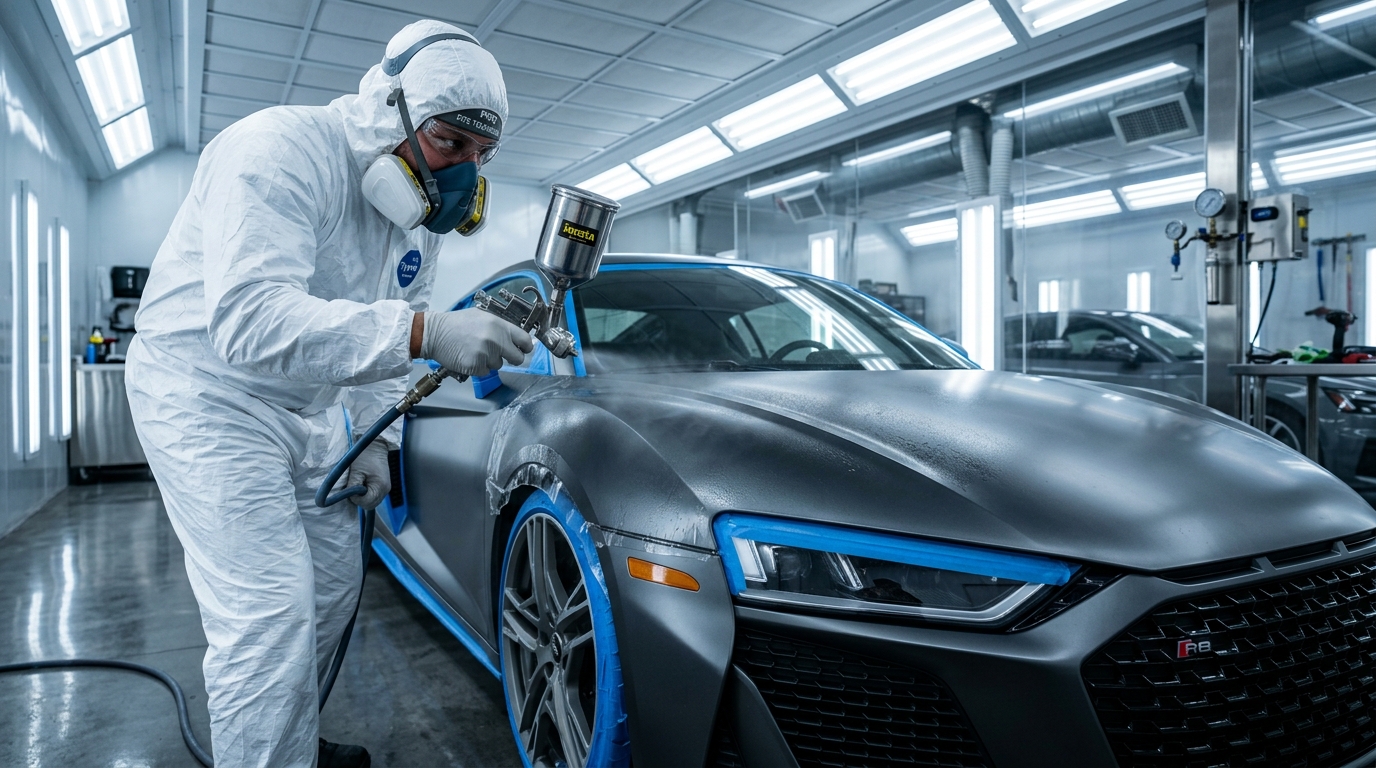
Peelable Paint Protection Systems (PPS), also known as Sprayable PPF or liquid-applied paint protection, represent one of the most significant technological breakthroughs in automotive surface defense. Unlike traditional film rolls that require stretching, slip solutions, and manual squeegeeing, PPS is applied through a specialized high-volume low-pressure (HVLP) spray gun in a controlled cleanroom spray booth.
Once cured, it transforms into an optically clear, durable, and 100% peelable elastomeric membrane that conforms to every complex contour, emblem recess, and intake vent with zero seams, zero relief cuts, and zero stretch lines.
1. How Sprayable PPS Technology Works
Traditional sheet film PPF relies on polyurethane extruded rolls backed by pressure-sensitive acrylic adhesives (PSA). In contrast, PPS is a liquid polymer matrix that cross-links during an infrared or ambient cure cycle.
The Chemical & Physical Mechanism:
- Base Formulation: High-molecular-weight aliphatic elastomeric polyurethane resins suspended in specialized carrier solvents.
- Liquid Cross-Linking: Upon atomized spraying, multiple coats build a continuous monolithic membrane directly over factory OEM clear coat.
- Surface Self-Leveling: Liquid flow properties allow the coating to fill microscopic orange peel textures, resulting in a finish with higher clarity and zero adhesive distortion (silvering).
- Elastomeric Adhesion: PPS forms a controlled mechanical bond through surface tension rather than aggressive glue, ensuring it peels off cleanly in large sheets without leaving sticky adhesive residue.
2. PPS vs. Traditional TPU PPF: Technical Comparison
| Technical Parameter | Traditional TPU Sheet Film | Sprayable PPS (Liquid PPF) |
|---|---|---|
| Application Method | Manual wet slip solution & squeegee | Precision HVLP atomized spray booth |
| Edge Coverage | Wrapped around edges (risk of lift over time) | 100% seamless, continuous encapsulated edges |
| Complex Curves & Intakes | Requires relief cuts or multi-piece seams | Flawless monolithic coverage with zero seams |
| Film Thickness Range | 150 µm to 215 µm (6 to 8.5 Mils) | Adjustable: 180 µm up to 350+ µm (7 to 14+ Mils) |
| Cutting on Paint Risk | Plotter pre-cut or manual razor trimming | Zero razor blades touching vehicle clear coat |
| Self-Healing Ability | Thermal elastomeric topcoat | High-density cross-linked self-healing clear |
| Custom Color Options | Limited colored TPU options | Unlimited OEM color matching + clear peelable |
3. Benefits of Peelable Paint Systems in Harsh Climates
In regions characterized by extreme UV index, airborne sand abrasion, and high ambient temperatures (such as South Punjab, Sindh, UAE, Saudi Arabia, and Qatar), PPS offers distinct thermodynamic advantages:
Key Advantages:
- 1Zero Edge Peeling in Sandstorms: High-speed motorway sand and pressure washer blasts frequently catch the exposed edges of sheet PPF. Because PPS creates a continuous wraparound shell around body panels, there are no exposed film edges to lift or collect grime.
- 2Customizable Impact Thickness: High-impact zones (such as front splitters, hood leading edges, and rocker panels) can be sprayed with thicker coats (up to 300+ microns) for extreme defense against gravel.
- 3Flawless Finish for Complex Supercars & SUVs: Vehicles with intricate grilles, hood scoops, and sharp aerodynamic wings (e.g., Porsche GT3, Land Cruiser LC300, Defender, Lamborghini) benefit from seamless liquid encapsulation.
4. Removal & OEM Clear Coat Safety
A primary concern among luxury car owners is whether peelable paint will damage factory paint when removed after years of exposure.
According to testing following ASTM D3359 (Standard Test Methods for Measuring Adhesion by Tape Test) and ASTM D4541 (Pull-Off Strength of Coatings):
- High-grade PPS maintains controlled tensile release. When peeling is initiated at a panel edge, the film stretches and releases uniformly in continuous sheets.
- Because PPS does not use acrylic tack adhesives that bake into clear coat pores under 48°C heat, factory paint remains completely unblemished, preserving original OEM paint thickness and resale valuation.
Frequently Asked Questions (FAQ)
Is sprayable PPS more expensive than standard TPU PPF?
PPS application requires a dedicated cleanroom spray booth, certified master spray technicians, and multi-stage curing, making its base material and labor cost comparable to or slightly higher than premium 8.5 Mil TPU sheet installations. However, for complex exotic vehicles with high labor hours, PPS often provides better value and superior edge finish.
Can ceramic coating be applied on top of PPS?
Yes. Cured PPS can be top-coated with SiO2 quartz ceramic coatings (such as GYEON Quartz or Koch-Chemie sealants) to enhance hydrophobicity, slickness, and chemical resistance against bird droppings and industrial fallout.
How long does PPS last under Middle Eastern and South Asian sun?
High-grade aliphatic PPS is UV-stabilized and engineered to last 5 to 7+ years without yellowing, chalking, or delaminating when properly maintained with pH-neutral washing protocols.
> Related Master Guide: For an authoritative technical deep-dive into this subject, read our clinical analysis on Peelable Paint Protection Spray vs TPU Film: Real Price Breakdown in Pakistan and What Stops highway Gravel Chips.