
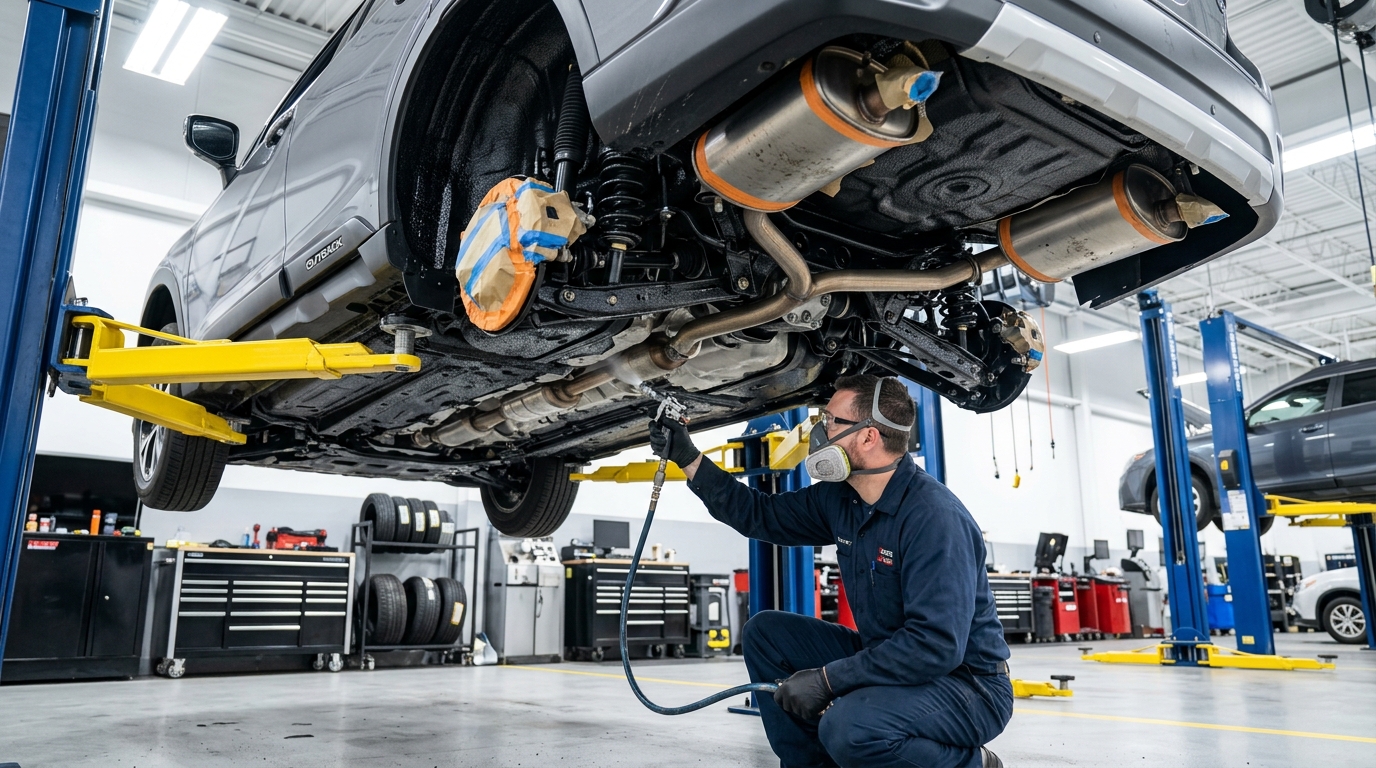
The undercarriage of your vehicle is its most vulnerable structural zone. Constantly bombarded by road gravel, wet mud, acidic standing rainwater, and corrosive road salts or coastal saline air, bare steel chassis rails and galvanized floor pans will inevitably succumb to oxidation if left unprotected.
Underbody rust not only depreciates vehicle resale value by up to 30–40% but also threatens structural rigidity and passenger crash safety. Here is a definitive technical guide to choosing, applying, and maintaining professional automotive underbody coatings.
1. The Chemistry of Chassis Corrosion
Steel corrosion is an electrochemical oxidation reaction accelerated by moisture, oxygen, and electrolytes (dissolved minerals, salt, and acidic sulfur compounds in rainwater).
Corrosion Acceleration Factors in South Asia:
- Monsoon Water Logging: Standing rainwater mixed with road dirt and industrial runoff penetrates chassis crevices, creating localized galvanic corrosion cells.
- Coastal Saline Atmosphere (Karachi / Gawadar): Sodium chloride (NaCl) mist accelerates iron oxidation rates by up to 10× compared to dry inland air.
- Gravel & Stone Abrasion: High-velocity gravel thrown by tires chips thin factory e-coat primer, exposing bare sheet metal directly to atmospheric moisture.
2. Comparing Underbody Protection Chemistries
A. Rubberized Polyurethane Coatings (Gold Standard)
- Composition: Synthetic rubber polymers blended with polyurethane resins.
- Properties: Remains permanently flexible and impact-absorbent down to sub-zero and up to 90°C surface temps.
- Acoustic NVH Benefit: Absorbs road noise, tire hum, and gravel clatter, lowering interior cabin sound levels by 2 to 4 decibels (dB).
- Durability: 5 to 10+ years with zero cracking or peeling.
B. Bitumen / Asphalt-Based Sealants
- Composition: Heavy petroleum-derived asphalt compounds.
- Properties: Forms a thick, durable black barrier. Highly cost-effective for general moisture barrier.
- Limitations: Can harden and develop hairline micro-cracks over 3–5 years in extreme heat (45°C+), which can trap moisture underneath if not inspected annually.
C. Cavity Wax & Rust-Inhibiting Creep Oils (Internal Frame Defense)
- Composition: Microcrystalline paraffin waxes and active corrosion inhibitors (such as Dinitrol or Waxoyl).
- Properties: Extremely low viscosity; sprayed through 360° misting wands inside hollow chassis frame rails, rocker sills, and door bottoms.
- Creep Action: Creeps into welded lap joints and capillary gaps to displace existing moisture and oxygen.
3. Step-by-Step Professional Application Protocol
Step 1: High-Pressure Undercarriage Decontamination & Degreasing
        ↓
Step 2: Complete Drying with Hot Air Blowers (Zero Trapped Moisture)
        ↓
Step 3: Mechanical Masking of Exhaust, Heat Shields, Brakes & Drive Shafts
        ↓
Step 4: Rust Neutralization with Chemical Rust Converters (Tannic Acid / Phosphoric Base)
        ↓
Step 5: High-Pressure Airless Spray of Rubberized Chassis Armor (500–800 µm Dry Film)
        ↓
Step 6: Internal Cavity Wax Injection inside Box Sections & Subframe Rails
        ↓
Step 7: Quality Inspection Under High-CRI Workshop Lighting
4. Key Rules: What Must NEVER Be Coated
Applying underbody coating incorrectly can cause severe mechanical damage or fire hazards. A certified cleanroom workshop always masks the following components:
- 1Exhaust Pipe, Catalytic Converter & Muffler: Operating temperatures exceed 400°C–700°C, which will burn coatings and create toxic smoke or fire risks.
- 2Brake Rotors, Calipers & Hoses: Coating friction surfaces destroys braking performance.
- 3Rotating Propeller Shafts & Axles: Uneven coating thickness creates rotational imbalance and driveline vibration at highway speeds.
- 4Engine Oil Pan & Transmission Drain Plugs: Must remain accessible for routine servicing.
Frequently Asked Questions (FAQ)
Does a brand new car need underbody coating?
Yes. Modern factory vehicles receive only minimal e-coat primer and localized PVC seam sealers. They lack full-coverage, thick rubberized impact protection across floor pans, suspension arms, and box frame cavities.
How much weight does an underbody coating add?
A full rubberized underbody and cavity wax treatment adds approximately 4 to 6 kg of total dry weight—an imperceptible amount that has zero impact on vehicle fuel economy while providing substantial noise dampening.
How often should underbody protection be inspected?
An annual inspection following the monsoon season ensures any stone impact gouges are touched up, maintaining an unbroken moisture barrier for the lifetime of the vehicle.