
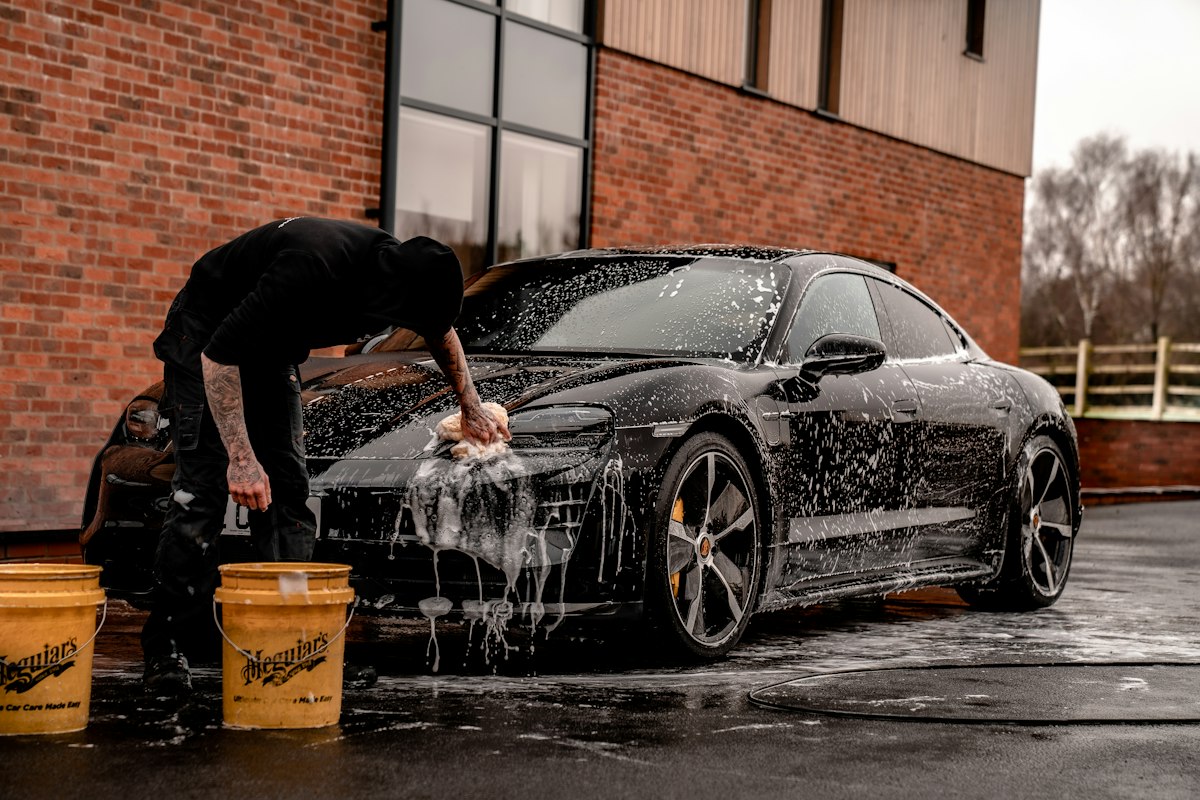
Achieving a smooth, glass-like finish on automotive paint requires more than regular washing. Over time, microscopic industrial pollutants, metallic brake dust, and tree sap bond stubbornly to the clear coat.
At The Detailing Ace, we follow a strict two-stage decontamination protocol. Here is how to properly decontaminate your vehicle's paint without causing scratches or clear coat marring.
1. Why Chemical Decontamination Must Come First
Many DIYers make the mistake of using a clay bar immediately after washing. This is dangerous.
If your paint has heavy metallic iron deposits, rubbing a clay bar over them can dislodge hard metal shards and drag them across the paint.
Step 1: Chemical Iron Removal
- 1Spray a dedicated pH-neutral Iron Fallout Remover across all painted panels and wheels in a shaded area.
- 2Watch for the color-changing reaction: As the chemical reacts with iron oxide particles, it turns deep purple/magenta.
- 3Allow to dwell for 3–5 minutes (never allow it to dry on panels).
- 4Rinse thoroughly with high-pressure water, washing away dissolved metal particles touch-free.
Step 2: Tar & Sap Dissolution
- Apply a specialized citrus or solvent-based tar remover to lower door panels, rocker panels, and rear bumpers.
- Allow it to dissolve tar spots into liquid residue, then wipe gently with a damp microfiber.
2. Mechanical Decontamination: The Clay Bar Process
Once chemical fallout is rinsed away, mechanical claying removes remaining embedded contaminants.
> Step-by-Step Claying Flow: > Clay Lubricant Spray → Gentle Linear Passes → Fold Clay → Wipe Clean
Step-by-Step Claying Technique:
- 1Knead the Clay: Flatten a quarter-size piece of detailing clay into a smooth, pliable disc.
- 2Generous Lubrication: Spray dedicated clay lubricant generously over a 2 imes 2 ext{ ft} section of paint. Never use clay on dry paint or plain water.
- 3Zero Downward Pressure: Glide the clay bar lightly across the lubricated panel in straight, overlapping lines. You will feel resistance as it shears contaminants, followed by smooth gliding.
- 4Inspect & Fold: Check the clay surface regularly. Fold and knead the clay to reveal a fresh, clean side as soon as it picks up dirt.
- 5Wipe Panel Dry: Wipe the section clean with a plush microfiber towel and move to the next panel.
3. Crucial Safety Rules for Claying
- If You Drop the Clay, Throw It Away: A clay bar dropped on the floor instantly picks up abrasive stones and grit. It cannot be washed and must be discarded immediately.
- Always Polish or Seal Afterward: Claying can introduce micro-marring on soft clear coats. Always follow decontamination with machine polishing or at least a high-quality sealant or ceramic wax.
Frequently Asked Questions (FAQ)
What is the difference between fine, medium, and heavy grade clay?
Fine grade clay is best for routine maintenance and soft paints with minimal risk of marring. Medium and heavy grade clays remove severe overspray and heavy industrial grit but require machine polishing afterward to remove micro-marring.
Can I use soapy water as clay lubricant?
While high-lubricity car shampoos can work, dedicated clay lubricants provide superior slickness and prevent the clay from breaking down or dissolving.