
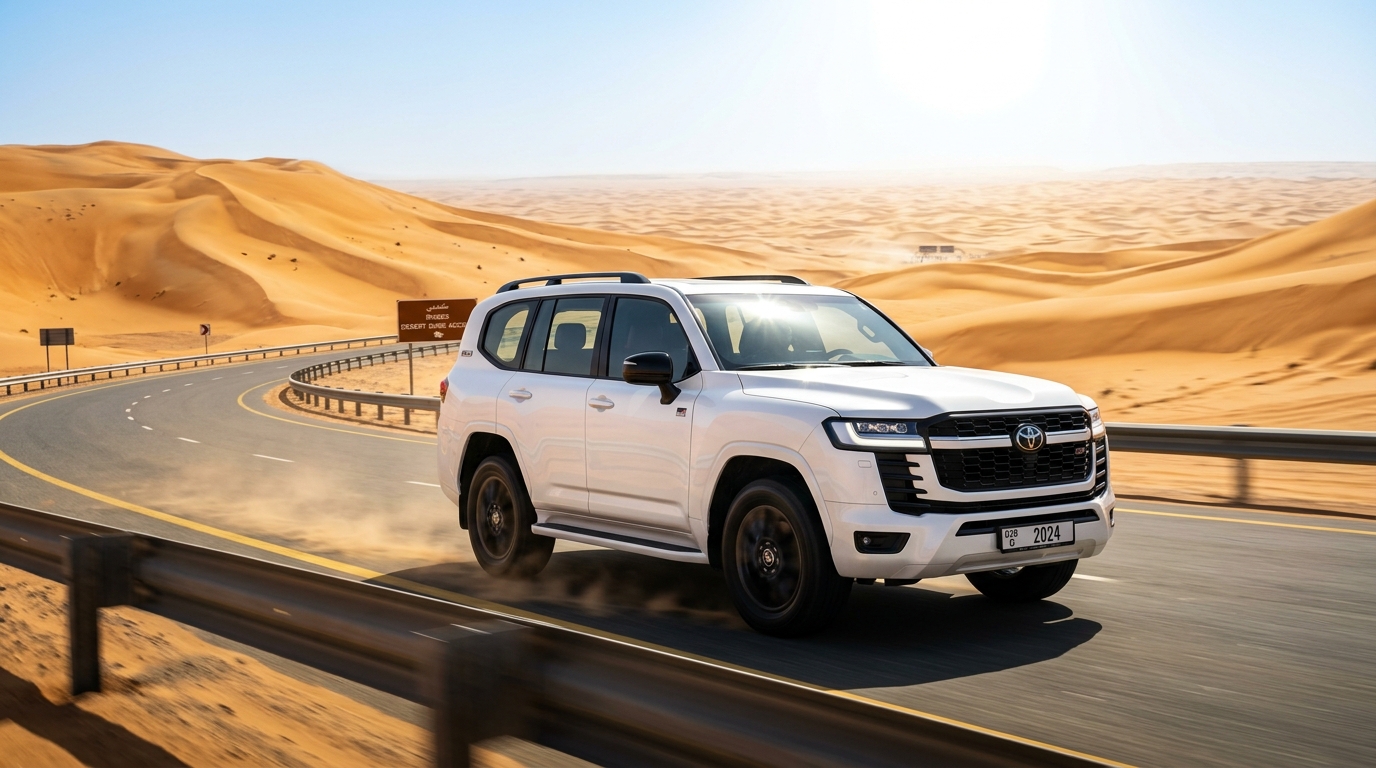
Operating a vehicle in South Asia and the Middle East subjects automotive paint to some of the harshest environmental extremes on Earth. In regions such as Multan, Jacobabad, Riyadh, Dubai, Kuwait, and Doha, summer surface temperatures on dark-painted body panels routinely exceed 75°C to 85°C, while the ambient air crosses 50°C.
Combined with high-velocity desert sandstorms, mineral-saturated hard water, and coastal saline humidity, unprotected clear coat can undergo catastrophic failure (chalking, peeling, deep oxidation) in under 3 years.
1. The Three Environmental Hazards of the Region
A. Solar Thermal Degradation & High UV Index
- UV-A & UV-B Radiation: Breaks the cross-linked polymeric bonds of automotive polyurethane clear coats, causing molecular chalking and fading.
- Thermal Expansion Cycles: Rapid temperature swings (48°C daytime heat to cooler desert nights or sudden car washes) cause micro-cracking in non-elastic sealants and inferior vinyl wraps.
B. High-Velocity Sandstorm Abrasion (Sandblasting)
- High-speed desert winds carry fine quartz and silica grains that act like microscopic sandpaper, pitting windshields, dulling headlight lenses, and creating severe matte hazing on hoods and bumpers within hours of motorway driving.
C. Mineral Hard Water Etching
- Groundwater in South Punjab, Sindh, and GCC regions contains high concentrations of calcium carbonate (CaCO₃), magnesium, and dissolved silicates. When droplets evaporate under blazing sun, mineral deposits bake into clear coat pores, forming permanent subterranean water spot craters.
2. Multi-Layered Protection Strategy
┌─────────────────────────────────────────────────────────────┐
│ 1. HIGH-IMPACT ZONES (Front End, Hood, Mirrors, Rockers):    │
│    → 8.5 Mil Optical TPU PPF (KPAL KA+ / XPEL Ultimate)     │
│    → Absorbs 100% of sandstorm pitting & rock chip impact   │
├─────────────────────────────────────────────────────────────┤
│ 2. UPPER & REAR BODY PANELS (Roof, Doors, Trunk, Pillars):  │
│    → Dual-Layer 9H Quartz Ceramic Coating (GYEON / Koch)   │
│    → Reflects UV radiation; prevents acid rain & water etch  │
├─────────────────────────────────────────────────────────────┤
│ 3. GLASS & PANORAMIC SUNROOF:                               │
│    → High-IR Ceramic Solar Heat Rejection Window Tint       │
│    → Blocks 99% UV and 80%+ Infrared Cabin Heat             │
├─────────────────────────────────────────────────────────────┤
│ 4. UNDERCARRIAGE & CHASSIS CAVITIES:                        │
│    → Rubberized Polymer Undercoating + Anti-Corrosion Wax   │
│    → Guards against saline moisture & monsoon puddle rust   │
└─────────────────────────────────────────────────────────────┘
3. Maintenance Protocols for 45°C+ Environments
- 1Never Wash Hot Panels in Direct Sunlight: Washing a car whose panels are hot causes soap and mineral wash water to flash-evaporate instantaneously, baking severe chemical etchings into the finish.
- 2Use Pure Deionized or Softened Water: A final rinse with filtered zero-TDS water eliminates mineral water spotting completely.
- 3Apply Silica Spray Sealant Booster Every 8–12 Weeks: Boosts the sacrificial sacrificial layer over ceramic coatings and PPF topcoats to maintain high water contact angles (>110°).
Frequently Asked Questions (FAQ)
Will PPF turn yellow in extreme Middle East and Pakistan heat?
Older Generation 1 films made of PVC or low-grade TPH yellowed rapidly under intense UV. Modern Aliphatic Polycaprolactone TPU films (such as KPAL KA+) are 100% UV-stable and backed by official 10-year anti-yellowing manufacturer warranties.
Is Graphene coating better than Ceramic coating in extreme heat?
Graphene-infused coatings have high thermal dissipation and slightly lower water-spotting tendencies than standard ceramic coatings on dark-colored cars, making them an excellent choice for hot desert climates.