
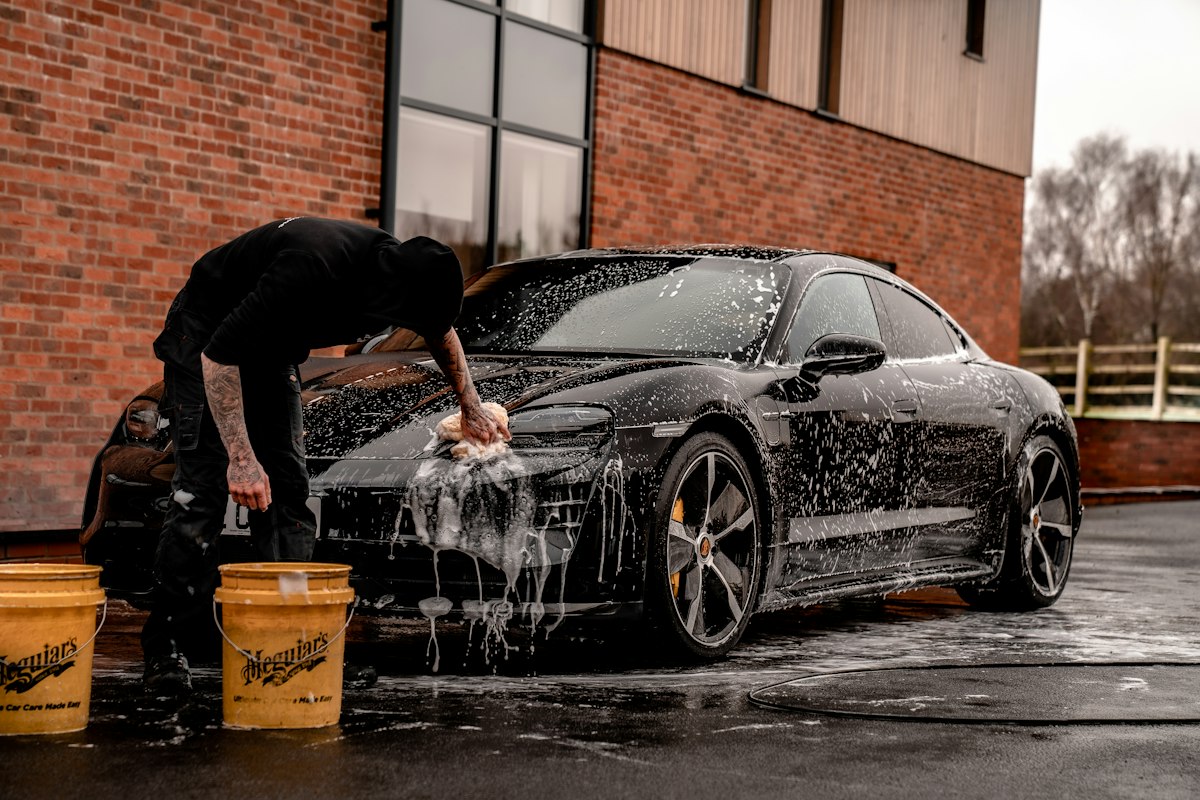
Investing in a professional 9H ceramic coating gives your vehicle unmatched gloss, chemical resistance, and hydrophobic self-cleaning properties. However, a ceramic coating is not maintenance-free. Proper wash technique is essential to preserve the nano-coating's hydrophobic matrix.
At The Detailing Ace, we provide every ceramic coating client with this official post-coating maintenance protocol.
1. The Critical 7-Day Curing Window
Immediately after application, the ceramic coating begins a chemical cross-linking process with your clear coat.
Rules for the First 7 Days:
- Do NOT wash the vehicle with soap.
- Do NOT allow water to sit on panels: If rain or morning dew gets on the car, gently pat dry with a soft microfiber towel.
- Remove bird droppings immediately: Soften with distilled water and dab gently without rubbing.
- Avoid parking under trees: Tree sap can interfere with uncured nano-layers.
2. The 3-Bucket & Foam Cannon Washing Method
Once fully cured, wash your vehicle every 2 to 3 weeks using this scratch-free method:
> 3-Bucket Wash System: > Bucket 1: Clean Soapy Water (with Grit Guard) > Bucket 2: Clean Rinse Water (with Grit Guard) > Bucket 3: Dedicated Wheels & Tires Bucket
Step-by-Step Procedure:
- 1Touchless Pre-Rinse & Snow Foam: Cover the vehicle in high-lubricity pH-neutral foam using a foam cannon. Allow foam to dwell for 4–5 minutes to lift and soften loose dirt.
- 2Pressure Rinse: Rinse top-to-bottom at 1200–1500 PSI, removing 90% of dirt before touching the paint.
- 3Two-Bucket Contact Wash: Use a plush microfiber wash mitt. Wash one panel at a time using straight, linear motions (never circular). Rinse mitt in the clean water bucket before reloading with soap.
- 4Clean Wheels Separately: Never use the same wash mitt or bucket on paint that you used on wheels, as brake dust particles cause severe scratching.
3. Approved vs. Prohibited Washing Products
| Approved Products (Safe for Ceramic) | Prohibited Products (Will Damage Coating) |
|---|---|
| Pure pH-Neutral Shampoos (pH 7.0) | Dishwashing liquids & degreasers |
| Plush Microfiber Wash Mitts | Stiff bristle brushes & traditional sponges |
| Touchless Warm Air Blowers / Twisted-Loop Towels | Chamois leathers & dirty shop rags |
| Dedicated Ceramic Detailers & Boosters | Harsh petroleum waxes & abrasive polishes |
| Automated Touchless Laser Washes | Automated Spinning Brush Washes |
4. Decontamination & Ceramic Boosting Schedule
- Every 3–4 Months: Apply an SiO₂-infused Ceramic Booster spray after washing to rejuvenate hydrophobic water beading and fill micro-pores.
- Every 6 Months: Perform a chemical iron fallout wash to unclog the coating from embedded road film and metallic dust.
Frequently Asked Questions (FAQ)
Why has my ceramic coating stopped beading water?
When water beading slows down, the coating is usually not gone—its microscopic pores are simply clogged with road film, oils, or mineral deposits. A chemical decontamination wash with a dedicated iron remover will unclog the layer and instantly restore beading.
Can I run a ceramic-coated car through an automatic car wash?
Never use automatic washes with spinning friction brushes. The brushes hold abrasive grit from hundreds of previous cars that will aggressively swirl and abrade the coating. Only touchless laser washes or hand washing are safe.