
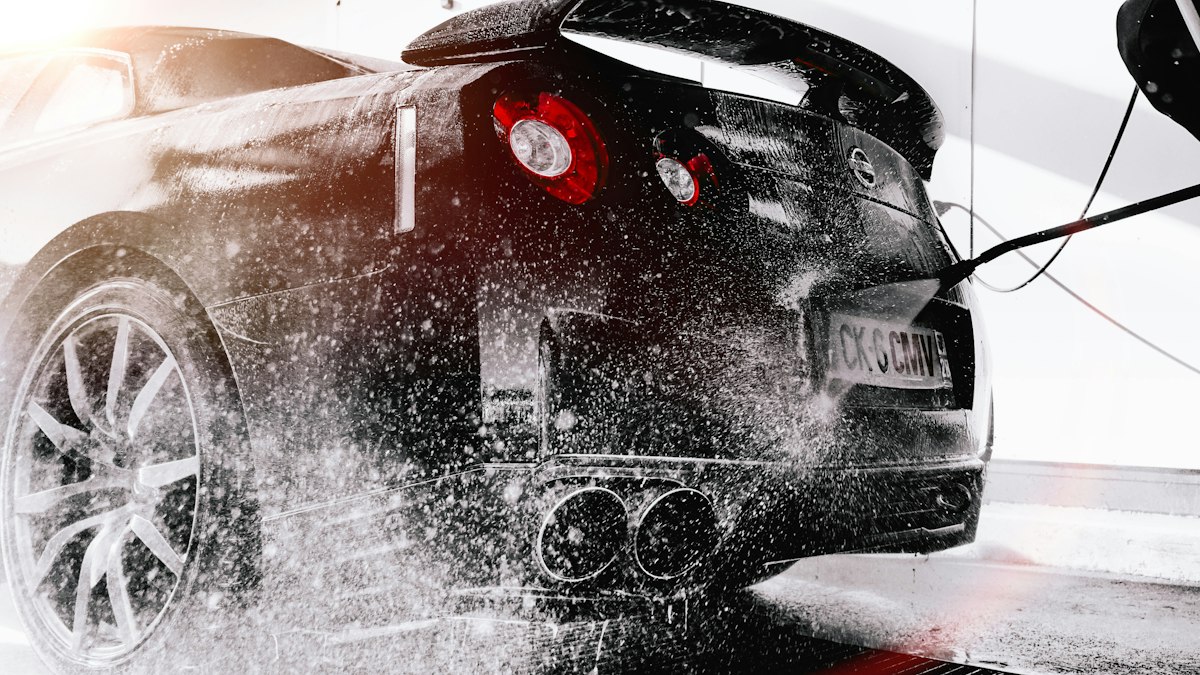
Washing your car with soap and water removes loose topical dirt, but it leaves behind an invisible layer of bonded industrial fallout, metallic brake dust, and environmental pollution. Skipping decontamination before polishing or sealing is one of the quickest ways to damage your clear coat.
At The Detailing Ace, we consider paint decontamination the single most critical step in automotive care. Here is the complete breakdown of why decontamination matters and how to perform it properly.
1. What are Bonded Contaminants?
As you drive, your vehicle is bombarded by microscopic airborne contaminants that embed themselves directly into the porous pores of the clear coat:
Major Types of Contaminants:
- Ferrous Iron Fallout: Microscopic hot metal shavings from brake pads and railway tracks that penetrate the clear coat and begin to oxidize into tiny orange rust specks.
- Industrial Pollution & Acidic Fallout: Chemical emissions from factories and roadways that create a rough, sandpaper-like texture.
- Tree Sap & Organic Resins: Sticky natural secretions that chemically etch clear coat under heat.
- Road Tar & Asphalt: Petroleum-based black splatters that regular car shampoos cannot dissolve.
2. The Two Stages of Complete Decontamination
> Decontamination Workflow: > Step 1: Chemical Decontamination (Dissolve iron & tar without touching paint) > Step 2: Mechanical Decontamination (Clay bar to lift remaining embedded grit)
Stage 1: Chemical Decontamination
- Iron Fallout Remover: A specialized pH-neutral chemical that reacts with embedded iron particles, turning purple as it dissolves the metal into a water-soluble complex.
- Tar & Glue Remover: A solvent that safely dissolves sticky bitumen and asphalt without mechanical scrubbing.
Stage 2: Mechanical Decontamination (The Clay Bar)
- Automotive detailing clay or synthetic clay mitts glide over the lubricated paint surface.
- The clay's tacky surface shears off and captures stubborn particulate matter sitting above the clear coat line.
3. Why Decontamination is Critical Before Machine Polishing
- 1Prevents Severe Swirl Marks: If you machine polish contaminated paint, the high-speed pad picks up embedded grit and drags it in circles across the clear coat, gouging deep scratches.
- 2Ensures 100% Chemical Bonding: Ceramic coatings and sealants require direct contact with bare clear coat resins. Bonded fallout prevents coatings from cross-linking properly, slashing their durability by over 70%.
- 3Restores Ultra-Smooth Glass Feel: Decontamination eliminates the gritty texture, leaving panels slick and glossy.
4. The Plastic Bag Test: How to Check Your Paint
To determine if your vehicle needs decontamination:
- 1Wash and dry your car thoroughly.
- 2Place your hand inside a thin plastic sandwich bag.
- 3Gently glide your fingertips across the bonnet and lower doors.
- 4If the surface feels rough, bumpy, or gritty, your vehicle requires immediate decontamination.
Frequently Asked Questions (FAQ)
Does claying a car remove scratches?
No. Clay bars only remove bonded surface debris. Removing physical scratches and swirl marks requires abrasive machine compounding and polishing.
How often should a car be decontaminated?
For daily driven vehicles, perform chemical iron decontamination and claying every 6 months, or immediately before applying any wax, sealant, or coating.