
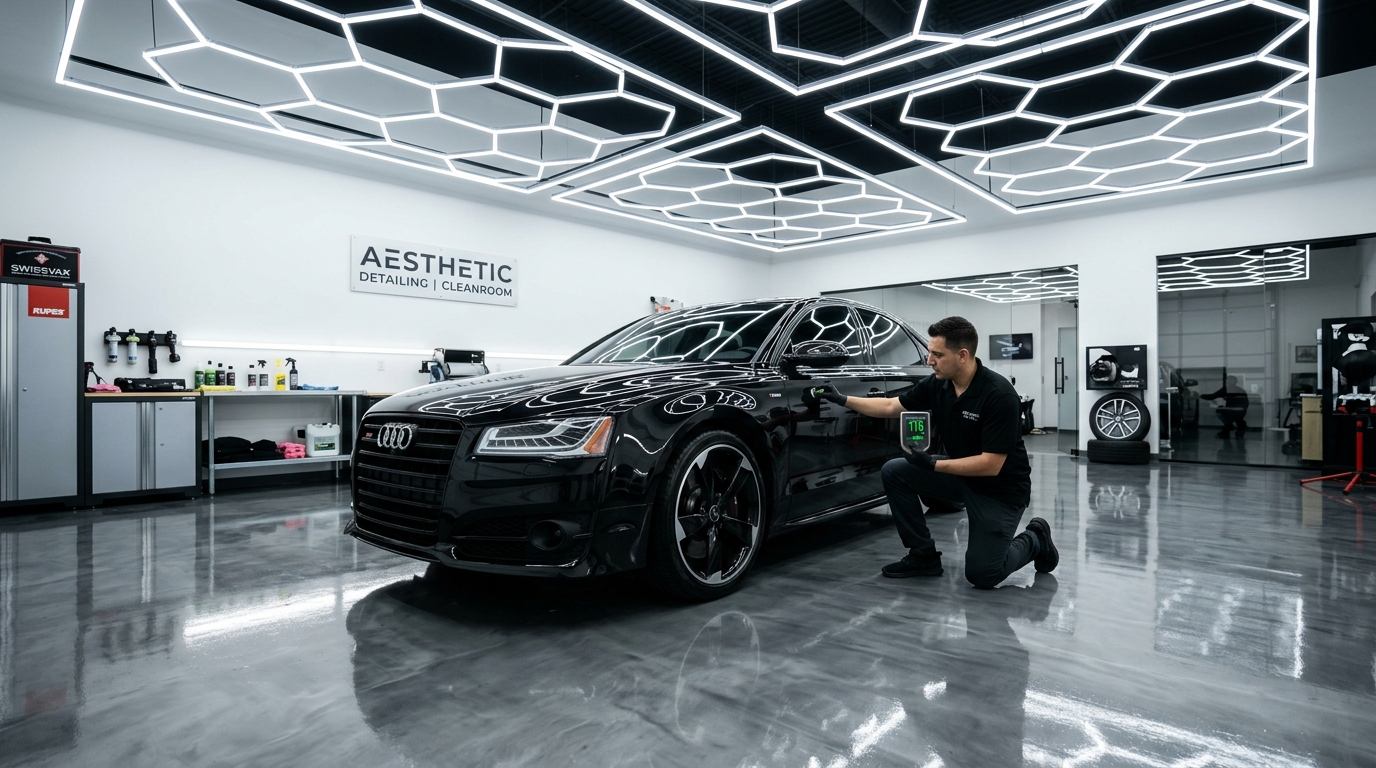
In precision automotive detailing, the physical environment where work is executed is just as vital as the skill of the technician and the quality of the chemical products used. Applying an 8.5 Mil TPU Paint Protection Film or a quartz ceramic coating in an open shop bay or roadside garage is the equivalent of performing surgery in an open parking lot.
Fine airborne dust, particulate matter (PM2.5 / PM10), humidity fluctuations, and poor lighting introduce micro-contaminants that permanently trap bubbles under PPF, create haze in ceramic coatings, and hide compounding holograms.
1. Engineering the Dust-Free Positive Pressure Bay
In high-dust environments (such as South Punjab, Sindh, UAE, and GCC desert regions), ambient air carries millions of microscopic silica dust particles per cubic meter.
Cleanroom HVAC Mechanics:
- Positive Pressure Aerodynamics: Industrial filtered blowers pump continuous filtered air into the studio bay, creating a higher internal air pressure than the outside atmosphere. When bay doors open, air rushes outward, preventing ambient dust, pollen, and sand from entering.
- Multi-Stage Filtration: Air passes through pre-filters and hospital-grade secondary media, eliminating 99.5%+ of airborne particulate matter down to 0.3 microns.
- Constant Climate Control (20°C–22°C): Regulated temperature maintains optimal adhesive tack and TPU elasticity, preventing adhesive distortion or premature drying of ceramic coating carriers.
2. High-CRI 5000K Hexagonal Lighting Arrays
Standard workshop fluorescent tubes or yellow incandescent bulbs emit narrow light spectrums that mask 60–80% of paint surface defects.
The Lighting Standard for Master Detailing:
- Color Rendering Index (CRI > 95): Emulates natural pure midday sunlight, rendering true color depth without deceptive reflections.
- 5000K Neutral White Color Temperature: Highlights micro-swirls, spider-webbing scratches, machine holograms, and compounding haze across all paint colors.
- Dual Lighting Geometry: Ceiling-mounted hexagonal diffusers provide broad area illumination, while adjustable 360° side-wall linear LED arrays expose vertical panel defects along doors and quarter panels.
3. Ultrasonic Paint Thickness Gauge (PTG) Auditing Protocol
Before a machine polishing pad touches vehicle clear coat, certified studios perform a complete non-destructive ultrasonic paint depth audit.
Total OEM Paint Thickness Profile (Typical Japanese / Pakistani Vehicle):
┌──────────────────────────────────────────────┐
│ Clear Coat (Top Layer):      30 – 45 µm      │ ← Only 30–45 microns thick!
├──────────────────────────────────────────────┤
│ Base Coat (Color Pigment):   15 – 25 µm      │
├──────────────────────────────────────────────┤
│ E-Coat Primer (Corrosion):   20 – 30 µm      │
├──────────────────────────────────────────────┤
│ Metal Substrate (Steel/Alu): 700 – 900 µm    │
└──────────────────────────────────────────────┘
Total Film Build: ~100 to 140 microns (Thickness of a single post-it note!)
Quality Control Standards:
- Preserving Factory Clear Coat: A multi-stage compounding session should remove no more than 2 to 3 microns of clear coat.
- Panel Mapping: Detailers record paint depth readings across 5 points per panel to identify previously repainted areas, thin factory edges, and plastic substrates.
Frequently Asked Questions (FAQ)
What happens if PPF is installed in a dusty workshop?
Dust particles become permanently embedded between the TPU film adhesive and the clear coat. This creates unsightly white specks, trapped air bubbles, and localized adhesion failure along panel edges.
Why do ceramic coatings need infrared (IR) curing lamps inside the cleanroom?
While ceramic coatings can cure slowly at room temperature over 48–72 hours, shortwave IR heat lamps accelerate quartz matrix cross-linking in just 15–30 minutes at 60°C, locking in maximum pencil hardness (9H) and chemical resistance before the car exits into real-world weather.